Divine Retreat Centre UK – Official Website


Struggling to forgive?
August 3, 2026
Is it Wrong to Honour and Venerate Mother Mary?
August 4, 2026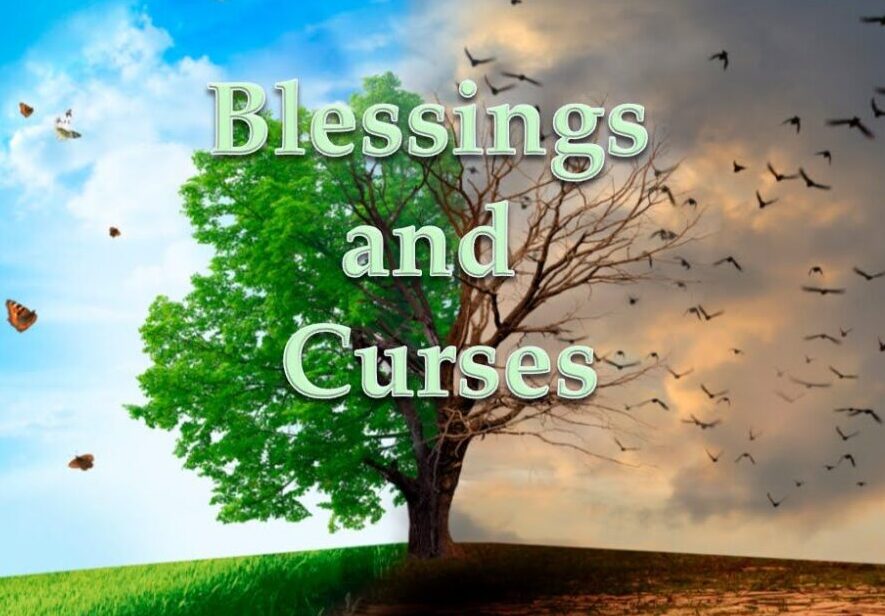
Luke 6:20
“Blessed are you who are poor, for yours is the kingdom of God.”
Luke 6:21
“Blessed are you who are hungry now, for you will be filled.”
Luke 6:21
“Blessed are you who weep now, for you will laugh.”
In this Gospel reflection, Fr. Joseph Edattu VC explains that these words of Jesus from Luke 6 may sound like a contradiction to human thinking. In the eyes of the world, poverty, hunger, sorrow, rejection, and suffering are usually seen as misfortunes or even curses. But Jesus calls these people blessed, showing that God’s way of seeing life is very different from the world’s way.
Fr. Joseph explains that the word “blessed” can also be understood as “happy.” This may seem strange because the world usually believes that happiness comes from wealth, comfort, success, and being accepted by others. According to worldly thinking, only the rich, powerful, and comfortable can be happy. But Jesus says that even the poor, the hungry, the sorrowful, and the rejected can be happy because God is with them and the Kingdom of God belongs to them.
To explain this more deeply, Fr. Joseph compares blessings in the Old Testament with blessings in the New Testament. In the Old Testament, blessings were often connected to material prosperity. Moses says in Deuteronomy:
Deuteronomy 28:1
“If you will only obey the Lord your God, by diligently observing all his commandments that I am commanding you today, the Lord your God will set you high above all the nations of the earth.”
Deuteronomy 28:2
“All these blessings shall come upon you and overtake you, if you obey the Lord your God.”
Deuteronomy 28:3
“Blessed shall you be in the city, and blessed shall you be in the field.”
Deuteronomy 28:4
“Blessed shall be the fruit of your womb, the fruit of your ground, and the fruit of your livestock.”
Deuteronomy 28:5
“Blessed shall be your basket and your kneading bowl.”
Deuteronomy 28:6
“Blessed shall you be when you come in, and blessed shall you be when you go out.”
Deuteronomy 28:7
“The Lord will cause your enemies who rise against you to be defeated before you; they shall come out against you one way, and flee before you seven ways.”
Fr. Joseph explains that in the Old Testament, blessings were largely connected to material prosperity, protection, success, children, land, crops, livestock, and victory over enemies. Wealth, increase, and security were seen as signs of God’s blessing.
However, in the New Testament, Jesus gives a new meaning to blessing. He calls the poor, the hungry, the weeping, the hated, the rejected, and the persecuted blessed. Fr. Joseph explains that Jesus takes what was once considered a curse and turns it into a blessing. Through His passion, death, and resurrection, Jesus transforms suffering into grace and gives spiritual meaning to pain, poverty, rejection, and sorrow.
Fr. Joseph emphasizes that if someone is poor, rejected, hated, abandoned, defamed, or sorrowful, they should not automatically see it as a curse. If Jesus is present in their life, these painful experiences can become blessings. What looks like suffering today can become tomorrow’s healing, deliverance, and spiritual blessing.
The main message is that Jesus can turn every curse into a blessing. Poverty, sorrow, rejection, and persecution are no longer the final word when Christ is in our life. What the world sees as failure or misfortune, God can transform into grace. This is why Jesus says, “Blessed are you who are poor,” “Blessed are you who are hungry now,” and “Blessed are you who weep now.”
Fr. Joseph also explains that Old Testament blessings were mostly material because the people were journeying from Egypt to the earthly Promised Land. But in the New Testament, our journey is different. We are moving from worldliness toward the heavenly Promised Land. Because of this, the blessings of the New Testament are more spiritual than material.